Uncategorized

Uncategorized

Ajman Residents: How Disinfection and Pest Control Protect Your Home

Keeping a home clean and healthy goes far beyond sweeping floors and wiping surfaces. In Ajman’s warm climate, pests, bacteria, and viruses can spread quickly — especially in kitchens, bathrooms, and outdoor areas. Many families only think about pest control or disinfection after a problem appears. But in reality, these services work best as preventive protection. If you live in Ajman, understanding how disinfection and pest control work together can help you create a safer, hygienic, and pest-free environment for your loved ones. This guide explains why these services matter, what they include, and how they protect your health, property, and peace of mind. Why Disinfection and Pest Control Matter in Ajman Ajman is developing rapidly — more buildings, more restaurants, more villas, and more apartments. While growth is exciting, it also creates conditions where pests thrive and germs spread. Factors such as: warm weather humid coastal air improper garbage handling storage of food and cardboard water leaks or damp corners …all create perfect breeding grounds for insects and harmful microorganisms. Pests carry germs — and germs attract more pests Cockroaches, rats, flies, and ants don’t just look unpleasant. They carry bacteria on their legs and bodies and spread it across: utensils kitchen counters floors food storage areas baby feeding zones Meanwhile, germs on surfaces — such as bacteria, mold, and viruses — can weaken immune systems and trigger illness. When homes are disinfected regularly and pests are eliminated, the cycle is broken. That’s why both services are essential, not optional. What Exactly Is Disinfection — and How Is It Different from Cleaning? Many people confuse cleaning, sanitizing, and disinfecting. Here’s the difference: Cleaning: removes visible dirt and dust   Sanitizing: reduces germs to safe levels   Disinfecting: kills harmful microorganisms such as bacteria, fungi, and viruses   Professional disinfection services use approved disinfectants and specialized equipment like foggers and sprayers to reach areas normal cleaning can’t. Benefits of professional disinfection in your home ✔ reduces risk of flu, viruses, and bacterial infections ✔ protects children, elderly residents, and pets ✔ treats hidden corners and high-touch surfaces ✔ creates a fresh, hygienic environment Disinfection is especially important after sickness, seasonal illness outbreaks, or when moving into a new home. Why Pest Control Is Essential — Not Just When You See Bugs A lot of Ajman residents only book pest control when they notice insects crawling across tiles or walls. But by the time pests are visible, colonies have usually been breeding for weeks. Common pests found in Ajman homes cockroaches — carriers of food-borne diseases   ants — invade kitchens and contaminate food   bed bugs — cause painful bites and sleepless nights   rats and mice — chew wires, spread serious infections   mosquitoes — breed in standing water   termites — silently damage wooden structures   Hidden damage pests cause Pests can: chew through electrical wiring   destroy furniture and wood   contaminate stored food   trigger allergies and asthma   ruin clothing and paper storage   Professional pest control doesn’t only remove pests — it identifies entry points, destroys nests, and prevents them from coming back. How Pest Control and Disinfection Work Together Think of pest control as removing the source of contamination, and disinfection as eliminating remaining germs. When both are done together: 1️⃣ pests are controlled and prevented 2️⃣ bacteria they may have left behind is eliminated 3️⃣ surfaces become safer for children and pets 4️⃣ your environment stays protected longer Many modern companies use municipality-approved products that are safe and effective, minimizing disruption to daily life. What Happens During a Professional Service Visit? If you’ve never booked disinfection or pest control before, here’s what usually happens. 1. Inspection Technicians check: kitchens, bathrooms, and storage areas cracks, drains, and corners garbage and moisture sources signs of pest activity 2. Customized Plan Homes differ — villas, apartments, and commercial spaces require different strategies. The team decides the safest and most effective approach. 3. Safe Application For pest control, methods may include: targeted gel baits residual sprays traps eco-friendly treatments For disinfection, technicians use: ULV foggers sprays high-grade disinfectants 4. Post-Service Guidance They advise on: when to ventilate rooms when to resume normal cleaning how to avoid re-infestation Follow-up visits may be suggested depending on pest type. Is It Safe for Children and Pets? Modern pest control and disinfection prioritise safety. Reputable companies: use municipality-approved chemicals apply minimal, targeted treatments follow proper safety protocols Temporary precautions are sometimes recommended, such as keeping kids and pets away for a few hours — but risk is controlled and guidance is always clear. How Often Should Ajman Residents Schedule Services? The right frequency depends on your environment. Homes: every 3–6 months Apartments with recurring pests: every 2–3 months Villas with gardens: quarterly Homes with infants or elderly residents: regular disinfection is recommended Routine service prevents issues before they become emergencies. Tips to Maintain a Pest-Free, Germ-Free Home Professional services work best when paired with good habits: seal food in airtight containers wipe kitchen counters nightly repair leaks and drains remove clutter and cardboard dispose of trash daily avoid standing water inside and outside store pet food securely These small steps reduce breeding opportunities for pests and bacteria. Choosing the Right Service Provider in Ajman Not every company offers the same quality. Look for: ✔ municipality-approved services ✔ experienced technicians ✔ clear service explanation ✔ safe, eco-friendly chemicals ✔ warranty or follow-up options Transparent communication is a key sign of a trustworthy provider. Final Thoughts: Protection Today Means Peace Tomorrow A clean home isn’t just about appearance — it’s about health, hygiene, and safety. For Ajman residents, combining disinfection services with professional pest control is one of the best ways to protect families from unseen threats. These services: prevent illness protect property eliminate pests safely create a comfortable living environment Instead of reacting when pests appear or sickness spreads, proactive treatment ensures your home remains protected all year long.
Uncategorized

A Complete Guide to Professional Pest Control for Homes & Businesses

Pests are more than an inconvenience — they threaten health, damage property, and can quickly harm a business’s reputation. Whether it’s cockroaches in the kitchen, termites silently eating wood, or rodents leaving dangerous droppings, the problem often grows faster than most people realize. That’s why professional pest control plays such a critical role in keeping homes and businesses safe, clean, and comfortable. In this guide, we’ll walk through what professional pest control really involves, why it matters, how treatments work, and what you can do to prevent future infestations. Why Pest Control Matters More Than You Think Many people only call pest control when they see pests. But by the time insects or rodents are visible, there’s usually a larger hidden infestation. Professional pest control helps protect: Homes Prevents damage to furniture, wiring, and structure Reduces allergies and asthma triggers Keeps kitchens and bedrooms hygienic Protects children, pets, and elderly family members  Businesses Maintains health-code compliance Protects stock, equipment, and electrical systems Safeguards brand image and customer trust Reduces liability and costly shutdowns Restaurants, warehouses, hotels, clinics, offices, and schools all rely on regular pest inspections and treatment to operate safely. Common Pests Found in Homes & Businesses Understanding the enemy is the first step to controlling it. Here are the most common culprits professionals deal with: Cockroaches Fast breeders, strong survivors, and major carriers of bacteria. They contaminate food, cause foul odors, and spread diseases. Bed Bugs Tiny, blood-feeding insects that hide in mattresses and furniture. They cause itchy bites and are notoriously difficult to eliminate without professional help. Rodents (Rats & Mice) Chew wires, damage insulation, contaminate surfaces, and spread dangerous diseases like salmonella and leptospirosis. Ants Small but persistent, ants invade food storage and form colonies in walls, kitchens, and gardens. Termites Silent destroyers that eat wood from the inside out — often causing major structural damage before being detected. Mosquitoes & Flies Spread diseases, thrive in moisture, and create uncomfortable living and working environments. DIY vs Professional Pest Control: What’s the Difference? It’s tempting to buy sprays and traps from the store — and sometimes they help temporarily. But DIY methods usually: Treat only the visible pests Miss nests and breeding areas Use chemicals incorrectly Push pests deeper into walls and cracks Professional pest control, on the other hand, focuses on root-cause elimination. Certified technicians: Identify pest species correctly Find hiding spots and entry points Use targeted, approved, and safe chemicals Apply long-term monitoring and prevention strategies In many cases, professional treatment actually saves money by stopping damage early and preventing repeated infestations. What Happens During a Professional Pest Control Visit? If you’ve never booked pest control before, you might wonder what to expect. The process is usually straightforward:  Inspection Technicians carefully inspect the property — inside and outside — to identify pests, entry points, moisture issues, food sources, and damage. Diagnosis & Plan Based on findings, they design a treatment plan tailored to your environment (home, restaurant, warehouse, etc.).  Safe Treatment Professionals use: Gel baits Residual sprays Traps Dust treatments Eco-friendly or municipality-approved chemicals Treatments are applied only where necessary, minimizing risk to humans and pets. Follow-Up & Monitoring Some pests require multiple visits. Professionals return to monitor progress and apply preventive measures. Is Professional Pest Control Safe? Modern pest control prioritizes safety first. Reliable companies use: Municipality-approved chemicals Low-odor and child-safe formulas Trained, licensed technicians Proper protective equipment They also give you clear after-care instructions — such as ventilating rooms, cleaning surfaces, or avoiding treated areas for a short time. How Often Should You Schedule Pest Control? The answer depends on where you live and the type of property: Homes: every 3–6 months Restaurants & food facilities: monthly Hotels & apartments: every 2–3 months Warehouses & offices: quarterly Routine service prevents infestations instead of reacting to them. Tips to Prevent Pests Between Treatments Even after professional pest control, a few good habits make a big difference: Keep kitchens clean and food sealed Fix leaks and standing water Seal cracks and gaps around doors and windows Take trash out regularly Avoid clutter where pests hide Store firewood and cardboard off the ground When hygiene and professional control work together, results last longer. Choosing the Right Pest Control Company Not all pest control providers are the same. Look for: ✔ Licensed and municipality-approved service ✔ Experienced, trained technicians ✔ Clear treatment plans and pricing ✔ Safe, eco-friendly options ✔ Follow-up support and warranty A trustworthy company explains everything clearly — and never hides costs. Final Thoughts Pests don’t disappear on their own. Left untreated, they spread quickly, damage property, and create unhealthy environments for families and businesses alike. Professional pest control offers peace of mind, long-lasting protection, and a cleaner, safer place to live and work. Whether you’re dealing with an active infestation — or want to prevent one — scheduling a professional inspection is the smartest first step.

Uncategorized

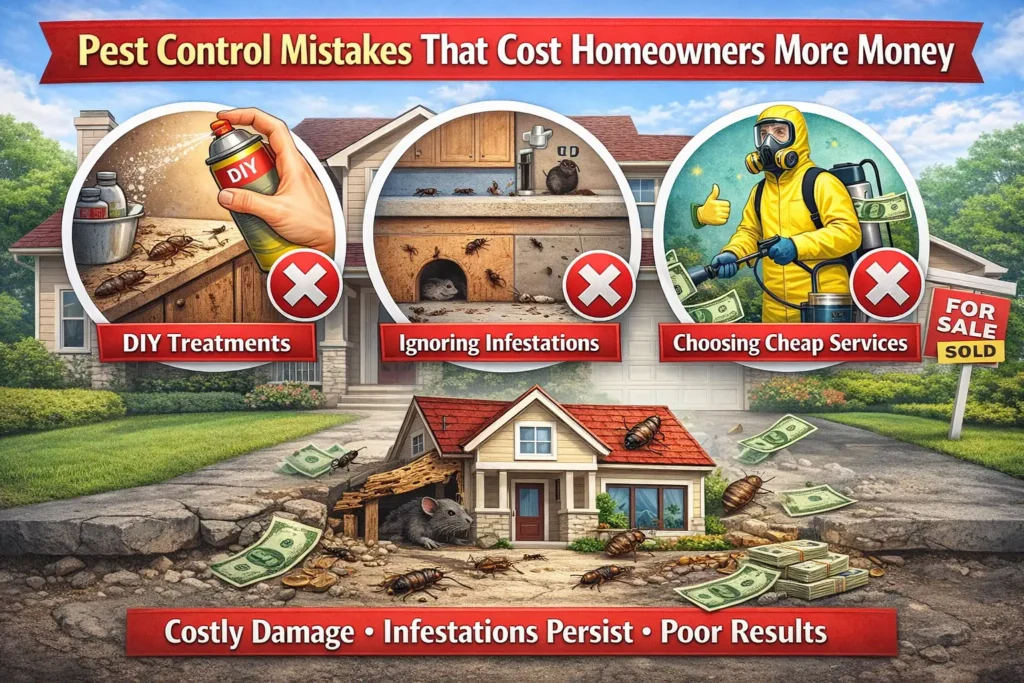
Pest Control Mistakes That Cost Homeowners More Money

Pest problems are a common concern for homeowners, especially in warm climates like the UAE, where cockroaches, termites, bed bugs, ants, and rodents thrive throughout the year. While many people try to save money by handling pest issues themselves or delaying treatment, these decisions often lead to bigger infestations, higher repair costs, and long-term damage. In this blog, we will explore the most common pest control mistakes homeowners make—and how these mistakes end up costing far more money than professional pest control services. 1. Ignoring Early Signs of Pest Infestation One of the biggest and most expensive mistakes homeowners make is ignoring the early warning signs of pests. Small indicators such as droppings, unusual smells, scratching noises, or a few visible insects may seem harmless at first. However, pests multiply quickly. What starts as a small problem can turn into a full-blown infestation in a matter of weeks. Termites, for example, can silently damage wooden structures for months before visible signs appear, leading to costly repairs. Why it costs more: Delaying action allows pests to spread deeper into your home, increasing treatment complexity and repair expenses. 2. Relying on DIY Pest Control Solutions Many homeowners turn to DIY pest control sprays, traps, and home remedies in an attempt to save money. While these products may temporarily reduce visible pests, they rarely eliminate the root cause of the problem. DIY methods often fail to reach nesting areas, breeding zones, or hidden pests behind walls and furniture. This results in recurring infestations that require repeated spending on ineffective products. Why it costs more: Repeated DIY attempts waste money and allow pests to survive, multiply, and cause further damage before professional treatment is finally required. 3. Using the Wrong Pest Control Treatment Different pests require different treatment methods. A common mistake is using a general insect spray for all pest problems without identifying the exact pest species. For example, German cockroaches need a different treatment approach than American cockroaches. Similarly, termite infestations require specialized soil or wood treatments that standard sprays cannot provide. Why it costs more: Incorrect treatment fails to solve the problem and can make pests resistant, leading to more expensive and advanced control methods later. 4. Not Hiring a Licensed Pest Control Company Hiring unlicensed or inexperienced pest control providers is another costly mistake. Cheap services may use low-quality chemicals, incorrect application methods, or lack proper follow-up. In the UAE, professional pest control companies must follow municipality regulations and use approved chemicals that are safe and effective. Why it costs more: Poor-quality service leads to recurring infestations, forcing homeowners to pay again for proper treatment. 5. Skipping Regular Pest Control Maintenance Many homeowners treat pest control as a one-time service rather than an ongoing preventive measure. Even after successful treatment, pests can return if preventive steps are not taken. Regular inspections and maintenance treatments help prevent reinfestation and catch problems early before they become serious. Why it costs more: Emergency pest control treatments are always more expensive than scheduled preventive maintenance. 6. Ignoring Structural Entry Points Small cracks, gaps, and openings in walls, doors, windows, and plumbing areas act as entry points for pests. Many homeowners focus only on killing pests without sealing these access points. Rodents and insects can easily re-enter the home if these openings are not properly sealed. Why it costs more: Without pest-proofing, infestations keep returning, leading to repeated treatment costs. 7. Poor Sanitation and Waste Management Food crumbs, uncovered garbage, and standing water attract pests. Even after professional treatment, poor sanitation habits can quickly bring pests back. Kitchens, storage areas, and waste disposal zones need regular cleaning to reduce pest attraction. Why it costs more: Continuous infestations require repeated treatments, increasing long-term expenses. 8. Ignoring Moisture Problems Moisture attracts pests such as cockroaches, termites, and mosquitoes. Leaking pipes, damp walls, and poorly ventilated areas create ideal breeding conditions. Many homeowners overlook moisture control as part of pest management. Why it costs more: Moist environments allow pests to thrive, making infestations harder and more expensive to control. 9. Not Addressing Outdoor Pest Sources Gardens, drains, and outdoor storage areas are common breeding grounds for pests. Homeowners often focus only on indoor treatment and ignore the outdoor environment. Pests can easily move indoors if outdoor sources are not managed. Why it costs more: Repeated indoor infestations occur because the main pest source remains untreated. 10. Using Excessive or Unsafe Chemicals Overusing pesticides or applying them incorrectly is dangerous and ineffective. Excessive chemical use can cause health risks to children and pets while failing to eliminate pests properly. Professional pest control services use the correct dosage and safe application methods. Why it costs more: Health risks, property contamination, and ineffective treatment lead to additional expenses and professional cleanup. 11. Not Following Post-Treatment Instructions After professional pest control treatment, homeowners are usually given specific instructions, such as avoiding cleaning certain areas or ventilating rooms properly. Ignoring these instructions can reduce treatment effectiveness. Why it costs more: Improper post-treatment care can result in pest survival and reinfestation. 12. Choosing Price Over Quality Selecting pest control services based solely on the lowest price is a common mistake. Low-cost services often lack warranties, follow-ups, and professional expertise. Quality pest control focuses on long-term prevention, not just short-term relief. Why it costs more: Repeated services and property damage outweigh the initial savings. How Professional Pest Control Saves You Money Professional pest control services offer: Accurate pest identification Targeted treatments Long-term prevention plans Safe and approved chemicals Regular monitoring and follow-up By addressing the root cause, professional pest control prevents costly repairs and repeated treatments. Final Thoughts Pest control mistakes can be far more expensive than investing in professional services from the beginning. Ignoring pests, relying on DIY solutions, and choosing low-quality treatments often lead to larger infestations, property damage, and higher long-term costs. For homeowners, the smartest choice is early detection, professional pest control, and regular maintenance. This approach not only protects your home and health but also saves money in the

Uncategorized

Effective Pest Control Solutions for Common Household Pests

Effective Pest Control Solutions for Common Household Pests Pests are one of the most common problems faced by homeowners and businesses worldwide. From cockroaches in kitchens to bed bugs in bedrooms and rodents in storage areas, pest infestations can cause serious health risks, property damage, and daily discomfort. Without proper control, pests multiply quickly and become harder to eliminate. Effective pest control solutions not only remove existing pests but also prevent future infestations. This blog explains the most common household pests, the problems they cause, and the best pest control solutions to keep your home clean, safe, and pest-free. Why Pest Control Is Important for Every Home Pests are more than just a nuisance. Many of them carry bacteria, viruses, and allergens that can affect your health. Rodents can damage electrical wiring, cockroaches contaminate food, and bed bugs disturb sleep and cause skin irritation. Ignoring pest problems can lead to: Health risks for children and elderly people Food contamination Structural damage to property Unpleasant odors and unhygienic conditions Professional pest control ensures a safe living environment and protects your property in the long term. Common Household Pests and Their Problems 1. Cockroaches Cockroaches are one of the most common household pests, especially in kitchens, bathrooms, and drains. They spread bacteria like Salmonella and E. coli, contaminate food, and trigger allergies and asthma. Signs of infestation: Small dark droppings Bad smell Cockroaches seen at night Effective pest control solution: Gel bait treatments Residual spraying in cracks and crevices Regular sanitation and sealing entry points Professional cockroach control is the most effective way to eliminate them completely. 2. Ants Ants invade homes searching for food and water. Once they find a source, they create trails and bring more ants quickly. Common problem areas: Kitchen counters Food storage areas Bathrooms Effective pest control solution: Ant bait stations Identifying and destroying nests Sealing cracks and entry points Professional ant control targets the colony, not just the visible ants. 3. Bed Bugs Bed bugs are small insects that hide in mattresses, bed frames, furniture, and cracks. They feed on human blood and cause itchy red bites. Signs of infestation: Red bite marks on skin Blood stains on bedding Small black spots on mattresses Effective pest control solution: Professional heat treatment or chemical treatment Mattress and furniture inspection Follow-up treatments to prevent re-infestation DIY methods usually fail; professional bed bug control is essential. 4. Rodents (Rats and Mice) Rodents cause serious damage by chewing wires, furniture, and insulation. They also spread diseases such as leptospirosis and salmonellosis. Signs of infestation: Droppings Scratching noises at night Chewed wires or furniture Effective pest control solution: Rodent baiting and trapping Sealing entry points Proper waste management Professional rodent control ensures safe and long-lasting results. 5. Termites Termites are silent destroyers that damage wooden structures, furniture, and foundations. Most termite damage goes unnoticed until it becomes severe. Signs of infestation: Hollow-sounding wood Mud tubes on walls Discarded wings Effective pest control solution: Soil treatment Wood treatment Termite baiting systems Professional termite control is essential to protect property value. 6. Mosquitoes Mosquitoes are not only annoying but also dangerous, as they spread diseases like dengue and malaria. Common breeding areas: Standing water Water tanks Plant pots Effective pest control solution: Larvicidal treatment Fogging Eliminating stagnant water Regular mosquito control reduces health risks and improves comfort. 7. Flies Flies spread bacteria by landing on food and surfaces. They are commonly found near garbage areas and kitchens. Effective pest control solution: Fly traps and UV light systems Proper waste disposal Regular cleaning Professional fly control ensures hygienic surroundings. Professional Pest Control vs DIY Methods Many homeowners try DIY pest control using sprays and home remedies. While these may provide temporary relief, they rarely eliminate the root cause. DIY Pest Control – Limitations Only kills visible pests   No long-term protection   Can be harmful if misused   Professional Pest Control – Benefits Targets pest source and breeding areas   Safe and approved chemicals   Long-lasting protection   Expert inspection and advice   Professional pest control is more effective, safer, and cost-efficient in the long run. Eco-Friendly Pest Control Solutions Modern pest control services focus on eco-friendly and low-toxicity solutions. These methods are safe for children, pets, and the environment. Eco-friendly approaches include: Gel baits instead of sprays   Targeted treatments   Integrated Pest Management (IPM)   Choosing eco-friendly pest control protects both health and nature. Preventive Pest Control Tips for Homes Prevention is always better than cure. Simple steps can help reduce pest problems: Keep kitchens clean and dry   Store food in sealed containers   Fix leaking pipes   Dispose of garbage properly   Seal cracks and gaps   Schedule regular pest inspections   Regular pest control maintenance helps prevent infestations before they start. When Should You Call a Pest Control Professional? You should contact a professional pest control service when: Pests keep returning   Infestation spreads quickly   DIY methods fail   Health risks are involved   Early treatment saves time, money, and stress. Conclusion Effective pest control solutions are essential for maintaining a clean, safe, and healthy home. Common household pests like cockroaches, ants, bed bugs, rodents, termites, and mosquitoes can cause serious health and property problems if left untreated. Professional pest control services offer reliable, long-lasting, and eco-friendly solutions that eliminate pests at the source and prevent future infestations. Regular inspections, preventive measures, and expert treatment ensure peace of mind and a pest-free living environment. Investing in professional pest control is not just about removing pests—it’s about protecting your home, health, and quality of life.

Uncategorized

Rodent Control Tips: How to Keep Rats and Mice Out of Your Property

Rodent Control Tips: How to Keep Rats and Mice Out of Your Property Rats and mice are some of the most common and dangerous pests found in homes and businesses. They are not only unpleasant to see but also pose serious health risks, cause structural damage, and contaminate food and surfaces. In regions like the UAE, where urban development, warm climates, and dense living conditions are common, rodent infestations can become a major issue if not handled properly. This guide will help you understand why rodents invade properties, the risks they pose, effective control tips, and how professional pest control services can permanently remove rats and mice from your property. Understanding the Rodent Problem Rats and mice are highly adaptable and thrive in environments with easy access to food, water, and shelter. They can squeeze through tiny gaps, reproduce quickly, and survive under tough conditions. Once they enter a property, they tend to hide and multiply fast, making early detection and prevention crucial. Common Rodents Found in Properties – House Mouse – Norway Rat – Roof Rat These rodents are often found in homes, villas, apartments, warehouses, restaurants, offices, and commercial buildings. Why Rodents Enter Your Property Rodents do not invade randomly. They are motivated by basic survival needs. Understanding these causes can help prevent infestations. 1. Easy Access to Food Uncovered food, open garbage bins, pet food, and leftover crumbs attract rodents. Kitchens, storage areas, and restaurants are common targets. 2. Water Sources Leaking pipes, water tanks, air conditioning drainage, and standing water provide essential hydration for rodents. 3. Shelter and Warmth Rodents seek dark, warm, and undisturbed places such as false ceilings, storerooms, basements, wall cavities, and behind appliances. 4. Poor Structural Maintenance Cracks, holes, broken vents, damaged doors, and open drainage systems make it easy for rodents to get inside. Dangers of Rats and Mice Infestation Ignoring a rodent problem can lead to serious issues. Health Risks Rodents carry harmful diseases including: – Leptospirosis – Salmonella – Hantavirus – Plague They contaminate food and surfaces with urine, droppings, and hair. Property Damage Rats and mice chew constantly to keep their teeth sharp, causing damage to: – Electrical wiring (risk of fire) – Furniture – Insulation – Wooden structures – Plastic pipes Food Contamination Rodents ruin stored food and packaging, leading to waste and hygiene concerns, especially in restaurants and warehouses. Rapid Reproduction A single pair of rodents can produce dozens of offspring in just a few months, causing infestations to grow quickly. Early Signs of Rodent Infestation Spotting rodents early can save you time, money, and stress. – Droppings near food areas or corners – Scratching or scurrying sounds at night – Gnaw marks on wires, furniture, or walls – Bad odor from hidden nests – Grease marks on walls – Shredded paper or fabric used for nesting If you see any of these signs, you need to act right away. Effective Rodent Control Tips to Keep Rats and Mice Away Seal Entry Points Rodents can enter through holes as small as a coin. Seal all gaps using: – Steel mesh – Cement – Silicone sealant – Door sweeps Pay special attention to doors, windows, vents, drainage pipes, and cable entry points. Maintain Proper Hygiene Keeping things clean is one of the best ways to prevent rodents. – Clean kitchen surfaces daily – Never leave food uncovered – Store dry food in sealed containers – Clean spills right away – Avoid clutter that offers hiding spots Manage Waste Properly Garbage is a major draw for rodents. – Use covered trash bins – Empty garbage daily – Clean bins regularly – Keep waste areas away from entrances Remove Water Sources Fix leaking pipes, taps, and air conditioning drainage. Rodents need water to survive, so getting rid of water sources makes your property less appealing. Organize Storage Areas Avoid stacking cardboard boxes and unused materials. Keep storage areas clean and raised from the ground. Trim Outdoor Areas Rodents often come from outside. – Trim plants and bushes near walls – Keep grass short – Remove debris and wood piles – Seal outdoor drainage openings Use Traps Carefully Traps can work for minor infestations, but they need to be set up correctly and monitored. – Place traps along walls – Avoid touching traps with your bare hands – Keep traps out of reach of children and pets However, traps alone are not a long-term solution. Avoid DIY Poison Misuse Using rodent poison incorrectly can be dangerous and ineffective. Poisoned rodents may die inside walls, causing bad smells and secondary infestations. Professional handling is always the best choice. Why Professional Rodent Control Is the Best Solution While basic prevention helps, professional rodent control services offer long-lasting and guaranteed results. Thorough Inspection Experts can find: – Entry points – Nesting areas – Types of rodents – Level of infestation Safe and Approved Methods Professional pest control companies use safe, approved treatments that work well for homes and businesses. Complete Elimination Professionals don’t just kill rodents; they address the root cause to prevent future infestations. Structural Proofing Pest control experts can offer solutions to permanently seal entry points. Ongoing Monitoring Regular inspections make sure rodents do not return. Rodent Control for Homes vs. Commercial Properties Residential Rodent Control Homes need safe, odorless, and family-friendly solutions, especially where children and pets are present. Commercial Rodent Control Businesses like restaurants, hotels, warehouses, and offices require strict hygiene standards and documentation to meet municipal regulations. How Often Should You Do Rodent Control? In the UAE climate, it is recommended to: – Conduct rodent inspections every 3 to 6 months – Get annual pest control contracts for complete protection – Schedule immediate service at the first sign of an infestation Preventive Measures for Long-Term Rodent Control – Regular pest inspections – Annual maintenance contracts – Awareness for staff and family – Immediate repair of structural issues – Professional sanitation advice Conclusion Rodent infestations are more than just a nuisance; they pose a serious threat to health,

Need Help?
Scroll to Top
Call Now