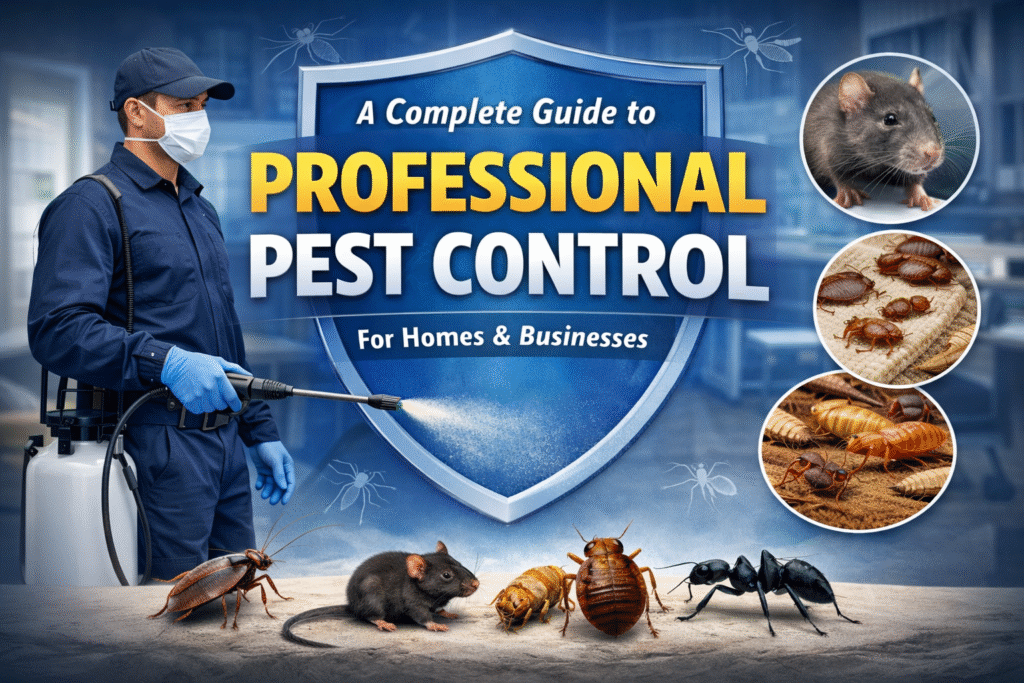
Pests are more than an inconvenience — they threaten health, damage property, and can quickly harm a business’s reputation. Whether it’s cockroaches in the kitchen, termites silently eating wood, or rodents leaving dangerous droppings, the problem often grows faster than most people realize.
That’s why professional pest control plays such a critical role in keeping homes and businesses safe, clean, and comfortable. In this guide, we’ll walk through what professional pest control really involves, why it matters, how treatments work, and what you can do to prevent future infestations.
Why Pest Control Matters More Than You Think
Many people only call pest control when they see pests. But by the time insects or rodents are visible, there’s usually a larger hidden infestation.
Professional pest control helps protect:
Homes
- Prevents damage to furniture, wiring, and structure
- Reduces allergies and asthma triggers
- Keeps kitchens and bedrooms hygienic
- Protects children, pets, and elderly family members
Businesses
- Maintains health-code compliance
- Protects stock, equipment, and electrical systems
- Safeguards brand image and customer trust
- Reduces liability and costly shutdowns
Restaurants, warehouses, hotels, clinics, offices, and schools all rely on regular pest inspections and treatment to operate safely.
Common Pests Found in Homes & Businesses
Understanding the enemy is the first step to controlling it. Here are the most common culprits professionals deal with:
Cockroaches
Fast breeders, strong survivors, and major carriers of bacteria. They contaminate food, cause foul odors, and spread diseases.
Bed Bugs
Tiny, blood-feeding insects that hide in mattresses and furniture. They cause itchy bites and are notoriously difficult to eliminate without professional help.
Rodents (Rats & Mice)
Chew wires, damage insulation, contaminate surfaces, and spread dangerous diseases like salmonella and leptospirosis.
Ants
Small but persistent, ants invade food storage and form colonies in walls, kitchens, and gardens.
Termites
Silent destroyers that eat wood from the inside out — often causing major structural damage before being detected.
Mosquitoes & Flies
Spread diseases, thrive in moisture, and create uncomfortable living and working environments.
DIY vs Professional Pest Control: What’s the Difference?
It’s tempting to buy sprays and traps from the store — and sometimes they help temporarily. But DIY methods usually:
- Treat only the visible pests
- Miss nests and breeding areas
- Use chemicals incorrectly
- Push pests deeper into walls and cracks
Professional pest control, on the other hand, focuses on root-cause elimination.
Certified technicians:
- Identify pest species correctly
- Find hiding spots and entry points
- Use targeted, approved, and safe chemicals
- Apply long-term monitoring and prevention strategies
In many cases, professional treatment actually saves money by stopping damage early and preventing repeated infestations.
What Happens During a Professional Pest Control Visit?
If you’ve never booked pest control before, you might wonder what to expect. The process is usually straightforward:
Inspection
Technicians carefully inspect the property — inside and outside — to identify pests, entry points, moisture issues, food sources, and damage.
Diagnosis & Plan
Based on findings, they design a treatment plan tailored to your environment (home, restaurant, warehouse, etc.).
Safe Treatment
Professionals use:
- Gel baits
- Residual sprays
- Traps
- Dust treatments
- Eco-friendly or municipality-approved chemicals
Treatments are applied only where necessary, minimizing risk to humans and pets.
Follow-Up & Monitoring
Some pests require multiple visits. Professionals return to monitor progress and apply preventive measures.
Is Professional Pest Control Safe?
Modern pest control prioritizes safety first.
Reliable companies use:
- Municipality-approved chemicals
- Low-odor and child-safe formulas
- Trained, licensed technicians
- Proper protective equipment
They also give you clear after-care instructions — such as ventilating rooms, cleaning surfaces, or avoiding treated areas for a short time.
How Often Should You Schedule Pest Control?
The answer depends on where you live and the type of property:
- Homes: every 3–6 months
- Restaurants & food facilities: monthly
- Hotels & apartments: every 2–3 months
- Warehouses & offices: quarterly
Routine service prevents infestations instead of reacting to them.
Tips to Prevent Pests Between Treatments
Even after professional pest control, a few good habits make a big difference:
- Keep kitchens clean and food sealed
- Fix leaks and standing water
- Seal cracks and gaps around doors and windows
- Take trash out regularly
- Avoid clutter where pests hide
- Store firewood and cardboard off the ground
When hygiene and professional control work together, results last longer.
Choosing the Right Pest Control Company
Not all pest control providers are the same. Look for:
✔ Licensed and municipality-approved service
✔ Experienced, trained technicians
✔ Clear treatment plans and pricing
✔ Safe, eco-friendly options
✔ Follow-up support and warranty
A trustworthy company explains everything clearly — and never hides costs.
Final Thoughts
Pests don’t disappear on their own. Left untreated, they spread quickly, damage property, and create unhealthy environments for families and businesses alike. Professional pest control offers peace of mind, long-lasting protection, and a cleaner, safer place to live and work.
Whether you’re dealing with an active infestation — or want to prevent one — scheduling a professional inspection is the smartest first step.